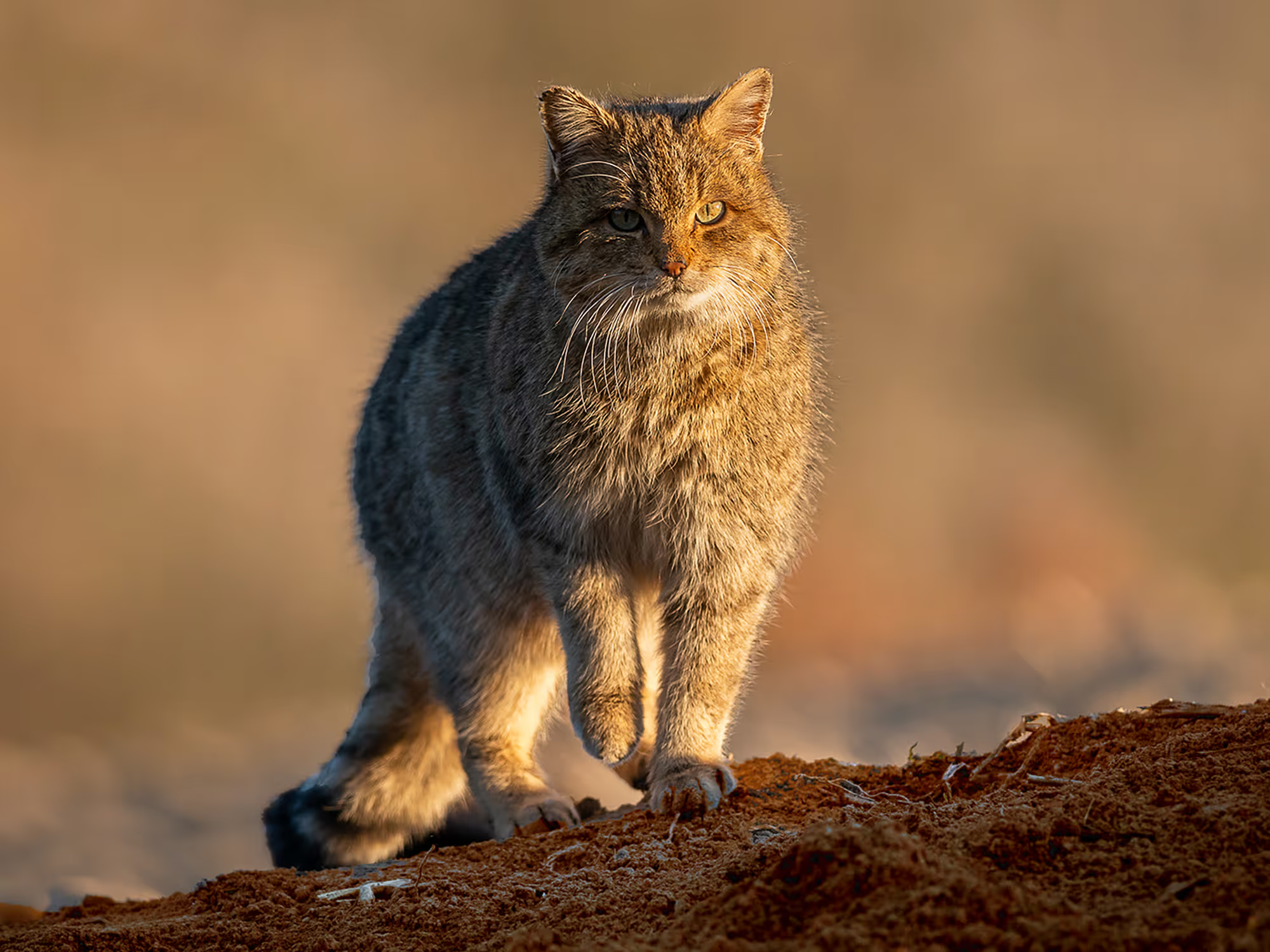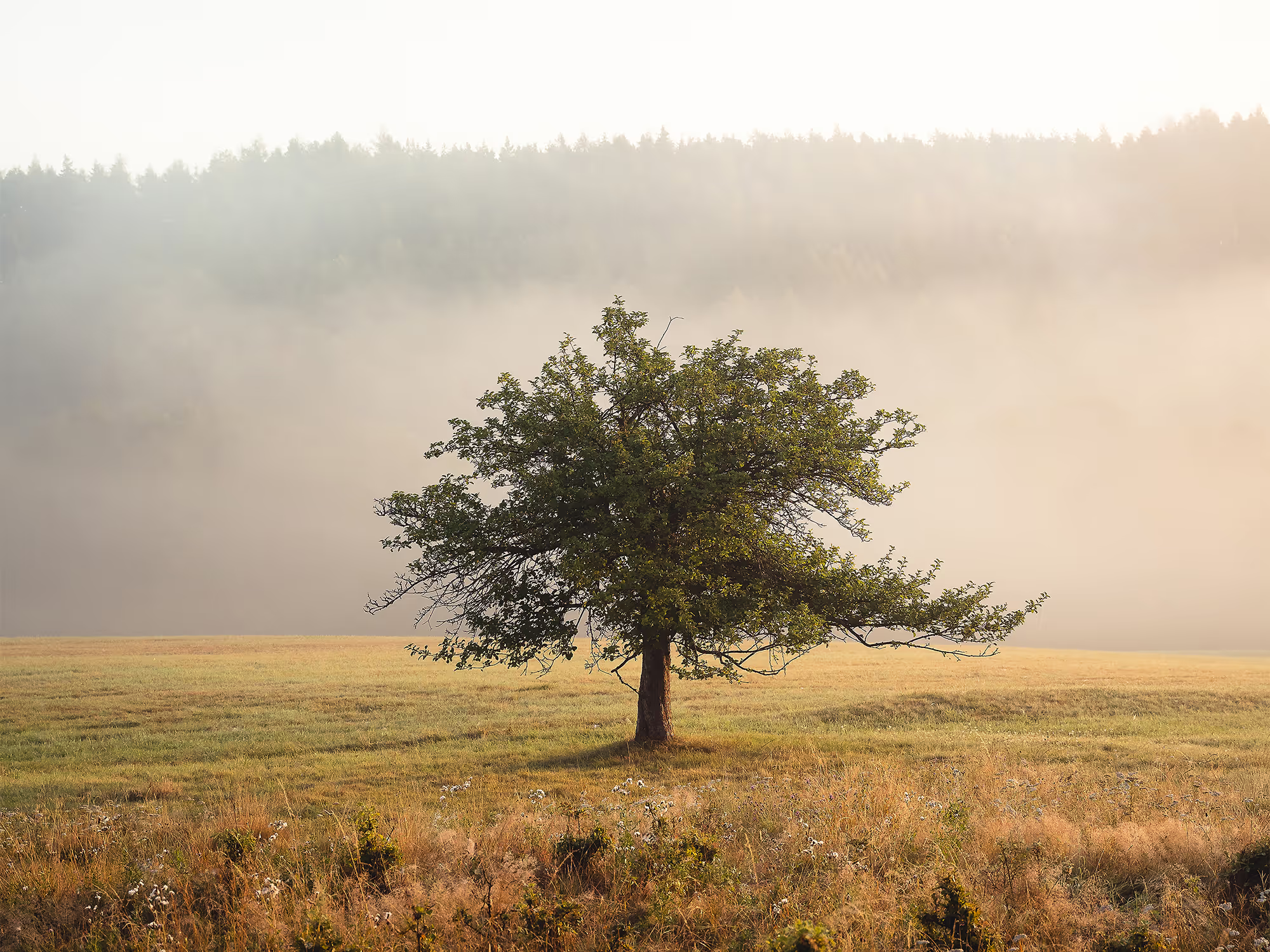

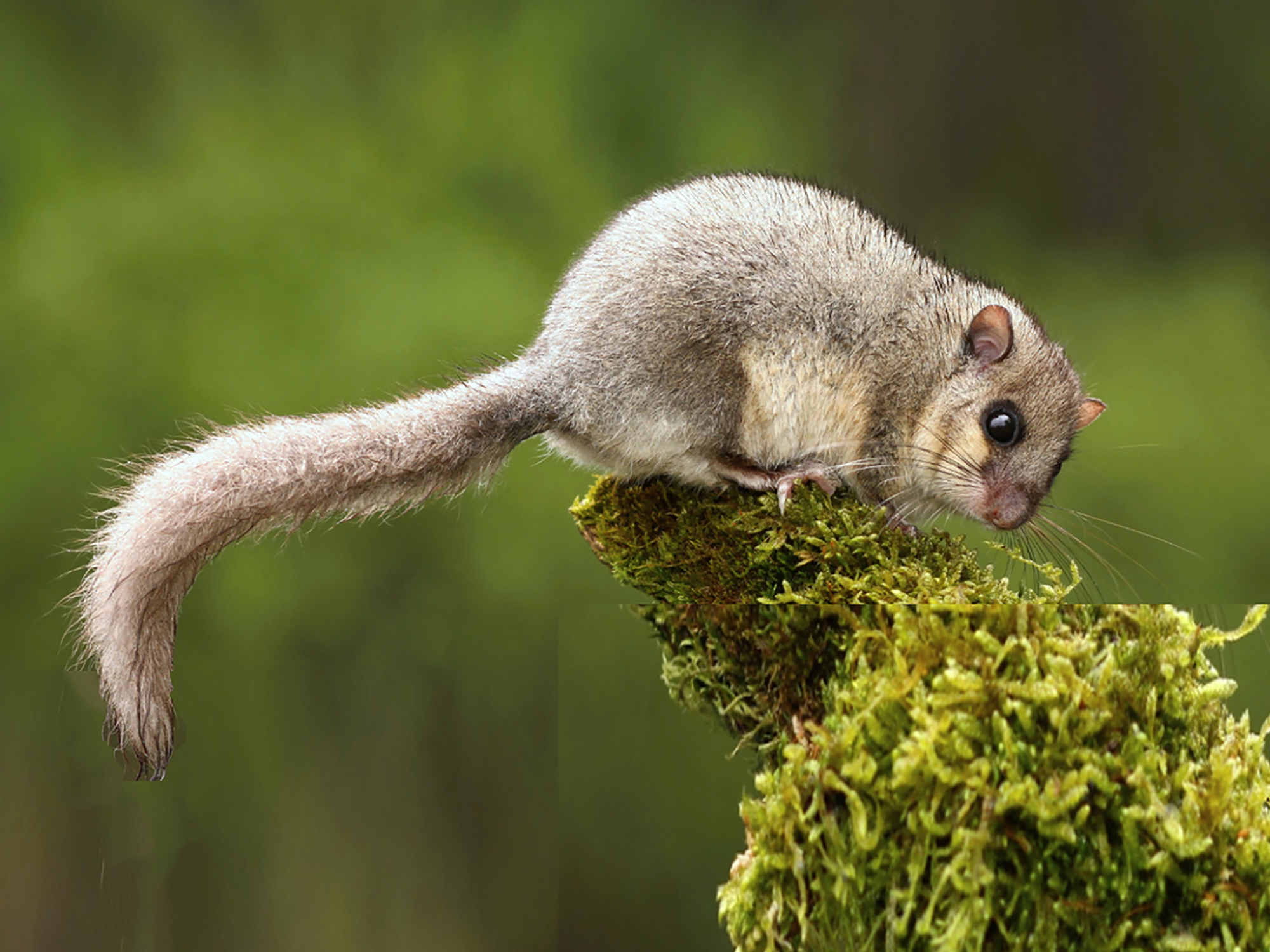
Discreet and nocturnal, this small rodent with large black eyes nests in the cavities of old trees and feeds in the canopies of our deciduous forests and old orchards. However, these environments are declining everywhere in Luxembourg: old trees felled, standard orchards uprooted, fragmented forests. Its disappearance would mean the loss of an entire ecosystem: woodpeckers, owls, bats, wildcats, saproxylic insects.
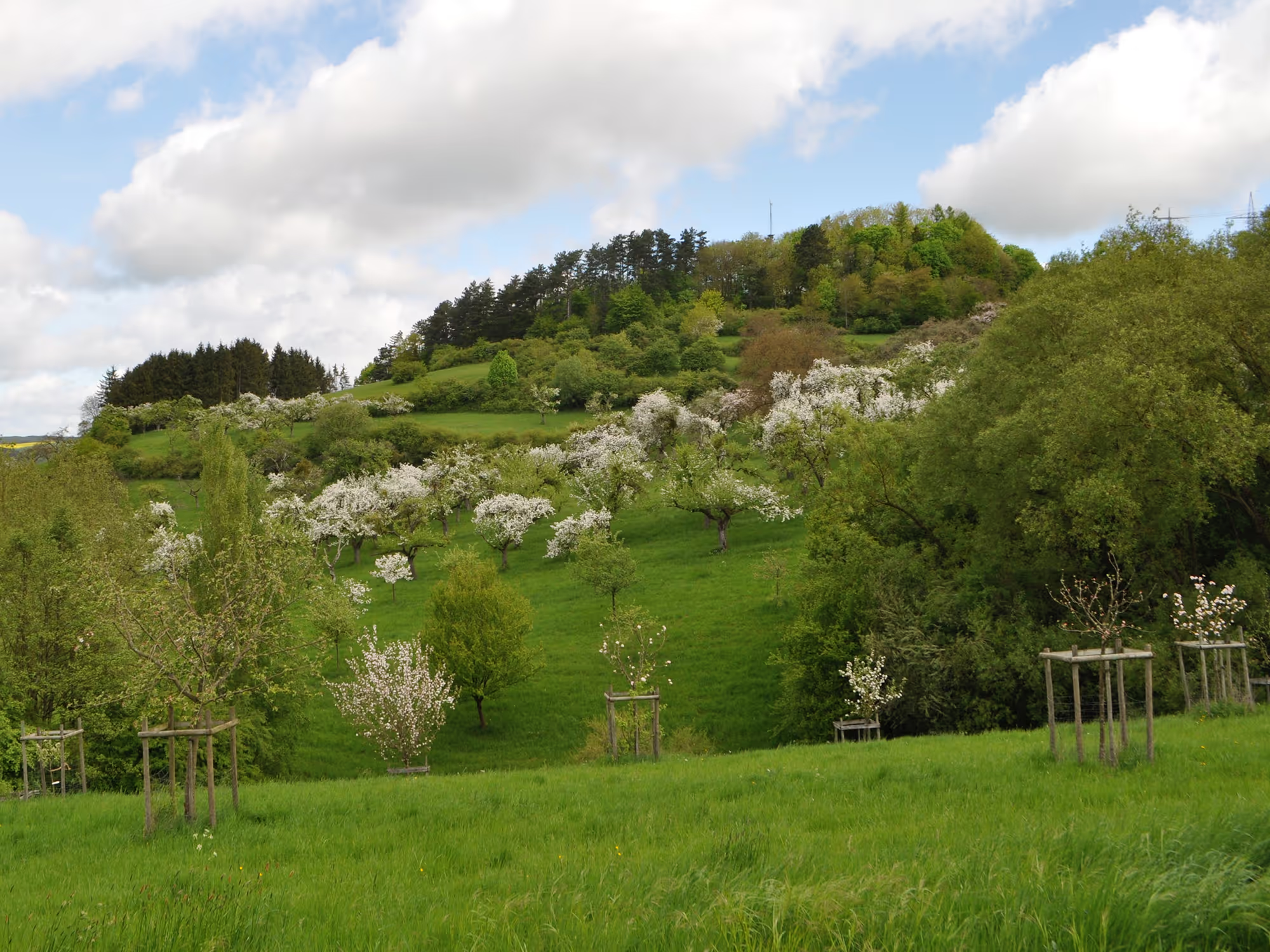
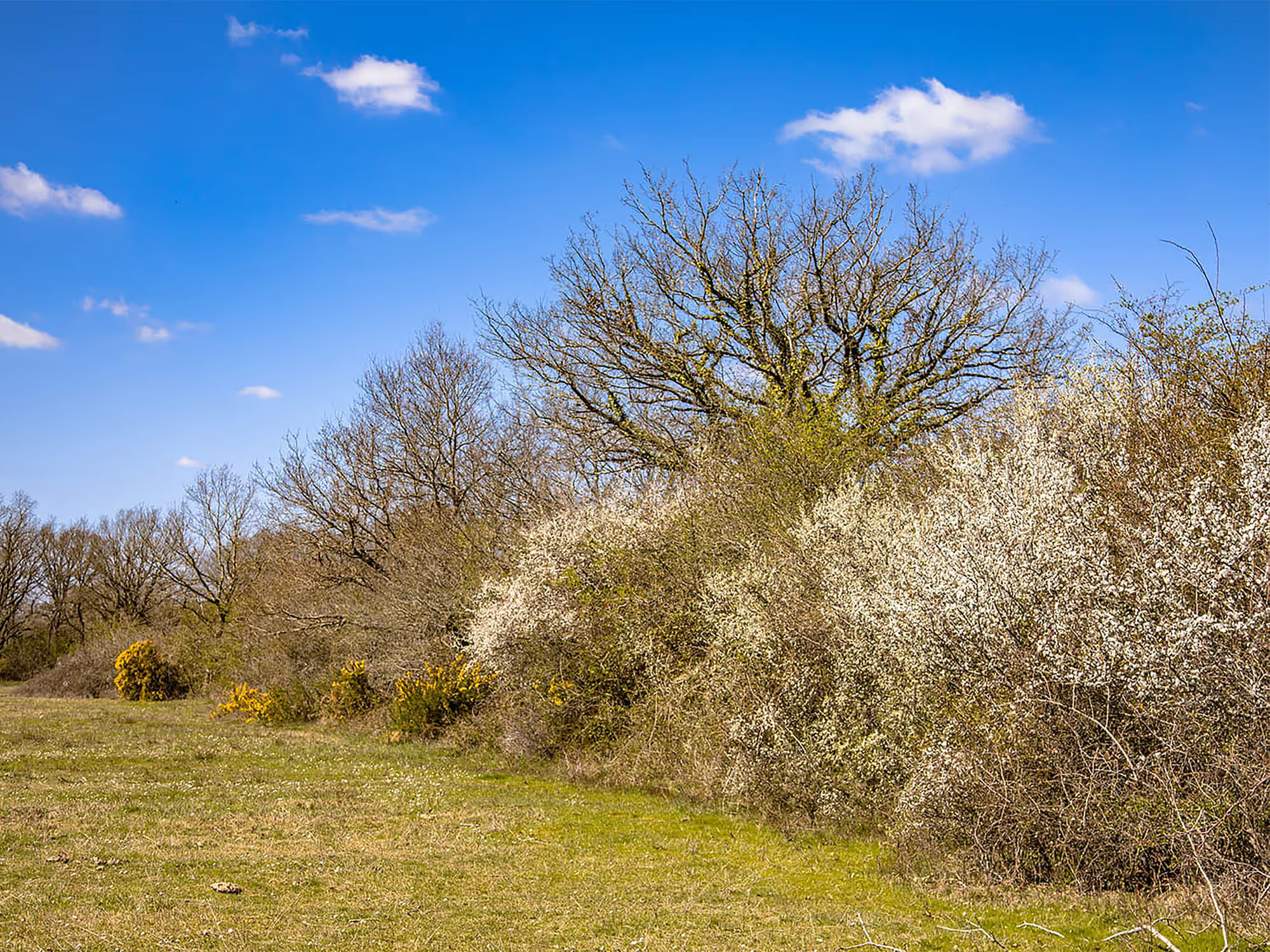
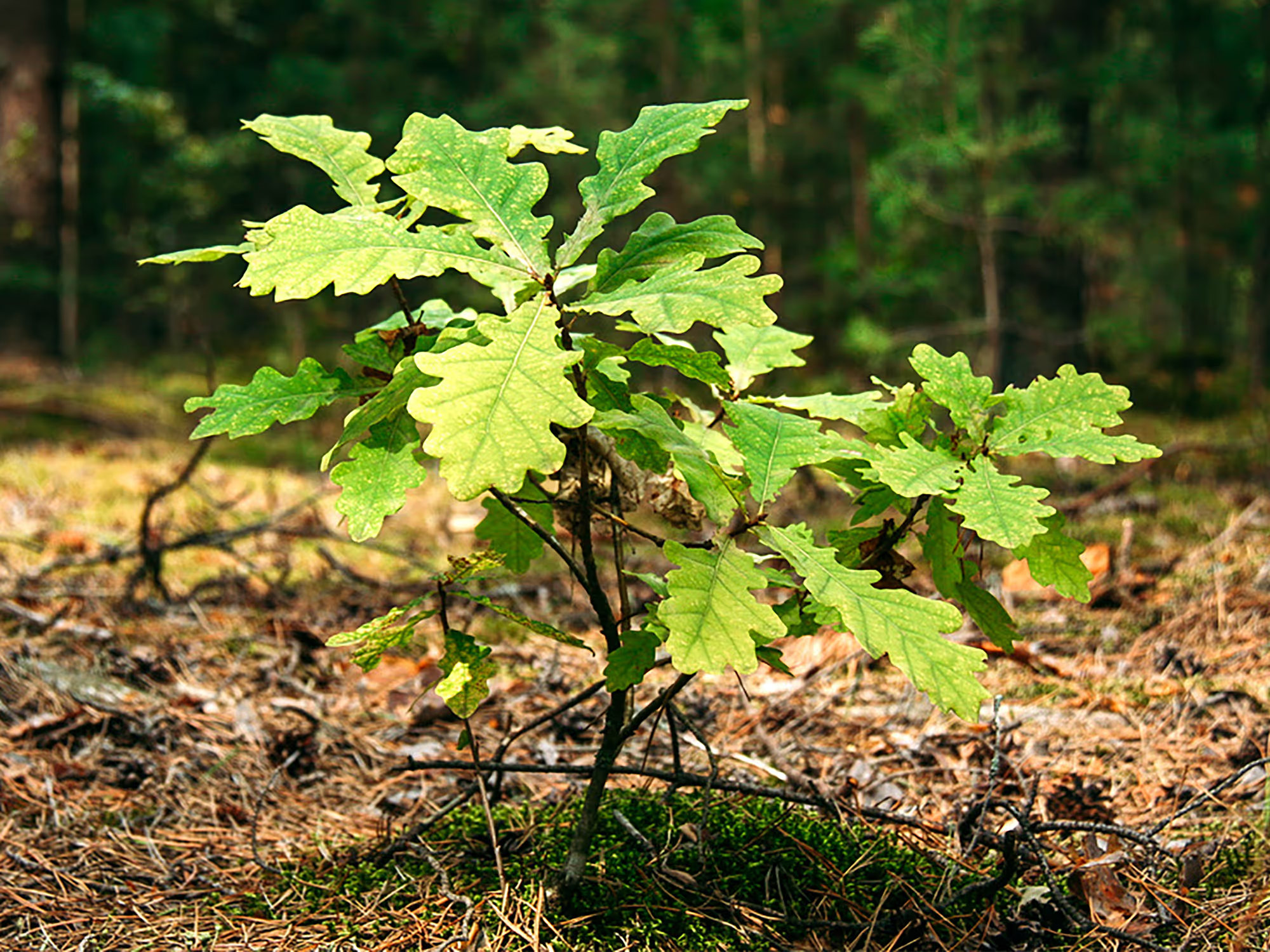
To reverse this trend, the Fondation Hëllef fir d’Natur is restoring the diversity of our landscapes: planting and maintaining standard orchards, restoring hedges, preserving old trees and habitat trees, protecting dead wood, creating old-growth forest islands, building dry stone walls and woodpiles, and reconnecting forest areas with deciduous species suited to forest edges. These measures benefit the edible dormouse (Glis glis), as well as dozens of species that share its habitat.
Together, let's give our landscapes back their natural structure and give the edible dormouse a chance to thrive. Images: Sometimes the edible dormouse hibernates in our nest boxes. As you can see in the photos, during our nest box check and cleaning, we found 2 deeply sleeping edible dormice. The last one was hidden so well that it was taken out with the rest of the nest. Of course, we left the dormice to continue their hibernation in complete peace.